
"Costa rica"
2000 article(s) found
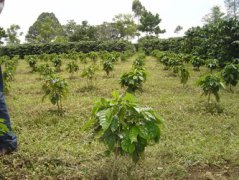
An overview of Costa Rican coffee beans the relationship between the origin and quality of Costa Rican coffee
Communication of professional baristas Please pay attention to the coffee workshop (Wechat official account cafe_style) the coffee beans produced in the high latitudes of Costa Rica are famous in the world, full-bodied, mild in taste, but extremely sour, and the coffee beans here are carefully processed, which is why there is high quality coffee. Costa Rica is located in SanJos, the capital of the State of Tarasu.

Costa Rican coffee bean price Costa Rica tourism price Costa Rican coffee bean flavor
Coffee is an important economic source of Costa Rica. It was introduced in 1808 and has been cultivated for 200 years. Costa Rica has 1x3 population invested in newly developed villa sarchi, newly developed villa sarchi and coffee-related industries. Colombians say that coffee has changed the country and enjoyed a rich environment, and coffee has indeed made an outstanding contribution.

Light and pure sweet Costa Rican Tara beads boutique coffee beans origin development history and culture brief introduction
Coffee was introduced to Costa Rica from Cuba in 1729, and today its coffee industry is one of the most well-organized in the world, producing up to 1700 kilograms per hectare. Costa Rica has a population of 3.5 million, but coffee trees number 400 million, and coffee exports account for 25% of the country's total exports. The volcanic soils of Costa Rica are very fertile and well drained, especially in the central part.

Coffee beans suitable for blending mixed coffee-Costa Rican coffee (Costarica C)
Costa Rican coffee (Costarica Coffee): Costa Rican coffee is produced in the Republic of Costa Rica (The Republic of Coffee) in the southern part of Central America. Its coffee quality is similar to Colombian coffee and is suitable for blending mixed coffee. Costa Rica is bordered by the Pacific Ocean on the west and the Caribbean Sea on the east. Costa Rica means "rich coast" in Spanish.

Introduction to the characteristics of Coffee Flavor description and Grinding degree varieties in Costa Rica Yersalo Coffee
Coffee was introduced into Costa Rica from Cuba in 1729. Today, its coffee industry is one of the well-organized industries in the world, with a yield of 1700 kg per hectare. Costa Rica has only 3.5 million people but 400m coffee trees, and coffee exports account for 25 per cent of the country's total exports. The volcanic soil of Costa Rica is very fertile and well drained, especially in the central part.

The development history of Costa Rican coffee Costa Rican coffee producing area
Costa Rican coffee is produced in the Republic of Costa Rica (The Republic of Costa Rica) in the south of Central America. Its coffee quality is similar to that of Colombian coffee and is suitable for blending mixed coffee. The coffee beans produced in the high latitudes of Costa Rica are famous in the world, full-bodied, mild in taste, but extremely sour. The coffee beans here are fine.

Boutique coffee Salvadoran coffee origin Salvadoran coffee practice
The coffee beans produced in the high latitudes of Costa Rica are famous in the world, full-bodied, mild in taste, but extremely sour. The coffee beans here have been carefully processed, which is why they have high-quality coffee. Tarasu, located in the south of SanJos, the capital of Costa Rica, is one of the most valued coffee growers in the country. Tarasu (

San Román Costa Rica, Costa Rica, California
High-quality Costa Rican coffee is known as extra-hard beans and can be grown at altitudes above 1500 meters. Altitude has always been a problem for coffee growers. Coffee beans are better at higher altitudes, not only because higher altitudes increase the acidity of coffee beans and thus enhance flavor, but also because lower night temperatures at higher altitudes can slow tree growth and thus

Costa Rican Coffee Coffee
Coffee is an important source of income for Costa Rica, introduced in 1808 and cultivated for 200 years. Costa Rica, where a third of the population is involved in coffee, Costa Ricans say coffee has transformed the country, making it an affluent environment, and coffee has contributed significantly, even though Costa Rica ranks last in terms of land mass in Central America.

Introduction to the characteristics and taste of coffee flavor varieties in Costa Rica Goddess Manor
Tarrazu in Costa Rica is one of the major coffee producing areas in the world. The coffee produced is light and pure in flavor and pleasant in aroma. Costa Rica, with its fertile volcanic soil and good drainage, is the first country in Central America to grow coffee and bananas for commercial value. Coffee and bananas are the country's main exports. In 1729, coffee was introduced from Cuba to Goth.

America Costa Rica Color Phoenix yeast washed SHB grade sweet and sour coffee beans
Professional coffee knowledge exchange more information about coffee beans Please follow the coffee workshop (Wechat official account cafe_style) in 1729, coffee began to appear in Costa Rica, at that time was introduced from Cuba. This made Costa Rica the first country in Central America to grow coffee and the first to grow coffee because of its commercial value. Then in 1821, Costa Rica became independent from Spain.

A brief introduction to the History and Culture of the Origin and Development of Costa Rican Yerzaro Fine Coffee beans
The newly developed villa sarchi planting, breeding and quality inspection research institutions, in addition, it also has 10 hectares of experimental plots, planting a number of excellent varieties. Coffee is Costa Rica's main agricultural product, with an annual output of more than 2 million bags (60 kilograms) and foreign exchange earnings of 250 million US dollars, second only to pineapples and bananas. All the coffee trees planted in Costa Rica are Arabica coffee trees.

Is coffee an important source of income for Costa Rica? the Fire Phoenix Manor in the mountains of central Costa Rica?
Coffee is an important economic source of Costa Rica. It was introduced in 1808 and has been cultivated for 200 years. Costa Rica has a population of 1Bux3 devoted to the newly developed villa sarchi, the newly developed villa sarchi and coffee-related industries. Colombians say that coffee has changed the country and enjoyed a rich environment, although coffee does contribute excellently.

Costa Rica Yerzaro
Coffee is an important economic source of Costa Rica. It was introduced in 1808 and has been cultivated for 200 years. Costa Rica has 1x3 population invested in coffee-related industries. Colombians say that coffee has changed the country and enjoyed a rich environment, and coffee has indeed made an outstanding contribution. Although Costa Rica ranks third from the bottom in terms of land area in Central America, the economic environment is better than half.

A brief introduction to the description of the flavor and aroma characteristics of Costa Rican Saint Roman Coffee
The research center, located about 30 kilometers northeast of the Costa Rican capital San Jose, belongs to the Costa Rican Coffee Association and is a research institution for villa sarchi planting, breeding and quality inspection newly developed by Costa Rica's national coffee breeds. in addition, it also has 10 hectares of experimental plots, planting a number of excellent varieties. Coffee is the main agricultural product in Costa Rica, with an annual output of more than 2 million bags

An introduction to the flavor and taste characteristics of the coffee producing area of Costa Rica's Saint Roman Coffee Manor.
Costa Rica is located in the Central American isthmus, belonging to North America, 10 north latitude, 84 west longitude. It is bordered by the Caribbean Sea to the east and the North Pacific Ocean to the west, with a coastline of 1290 km (212km on the east coast and 1016 km on the west coast). Costa Rica borders Nicaragua in the north (309 km long border) and Panama (639 km long border) south-southeast. Total
Costa Rican coffee beans Costa Rican coffee beans varieties Guatemala coffee
Costa Rica's high latitudes produce coffee beans famous in the world, rich, mild taste, but extremely acidic, coffee beans here are coffee beans carefully processed, because of this, only high-quality coffee. Tarasu, south of San Jos, Costa Rica's capital, is one of the country's most prized coffee plantations. Tarasu (

Costa Rica Fire Phoenix Manor Costa Rica Costa Rican coffee beans
Costa Rica Central Valley Cumbres del Poas country: Costa Rica grade: SHB producing area: central valley altitude: 1300-1500m annual rainfall: 3000 mm harvest month: December to February of the following year treatment: red honey varieties: Kaddura, Kaduai producer: fire Phoenix manor raw beans specifications: 18 mesh flavor: dried fruit, vanilla, honey

Description of Coffee Variety Culture and Fine Coffee Bean Taste in Saint Roman Manor, Costa Rica
Costa Rica has a variety of cultures, which is the cultural confluence of Central and South America. When the Spaniards conquered America in the 16th century, the northern part of Costa Rica was the southernmost territory of the Mayan civilization, the central and southern regions were Chibucha territories, and the west coast was inhabited by black slaves from Africa from the 17th to 18th centuries. at this time, many Chinese

The advantages of Costa Rica in developing coffee what are the well-known coffee producing areas of Costa Rica?
Costa Rica, located in Central America, is bordered by Nicaragua to the north, Panama to the south, the North Pacific Ocean to the west and the Caribbean Sea to the east. It is the most advanced and economically developed country in Central America, and is the first Central American country to introduce coffee in historical records. Costa Rica, located in the Central American Gorge, has a number of high-altitude